Thousand-Year Egg and Pork Congee Recipe (Century Egg Congee)
 By S. H.November 21, 2026One Min Read
Congee for chilly days
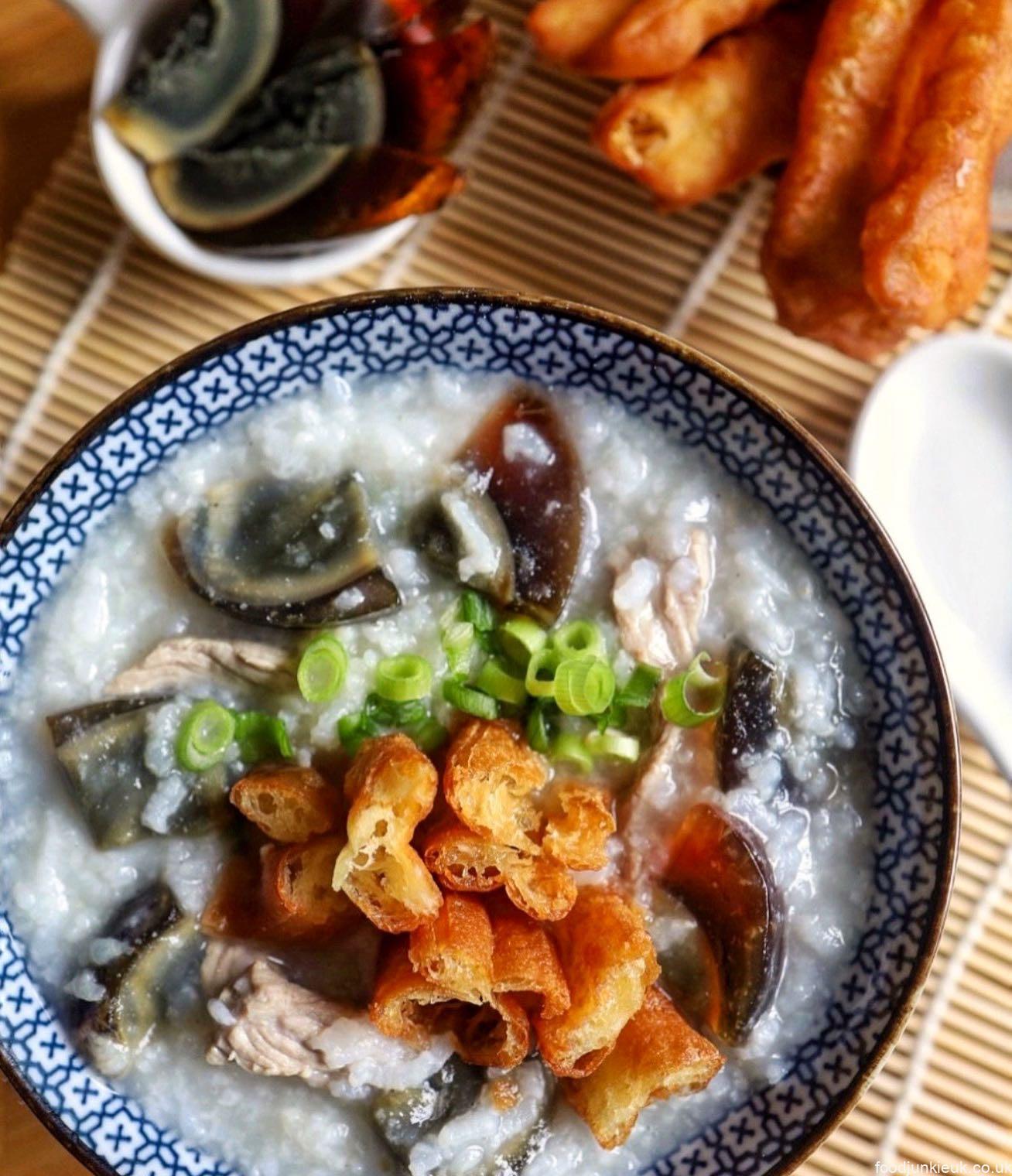
A bowl of congee is perfect for when the weather is a bit chilly. Congee can be eaten for breakfast, lunch or dinner, so it’s basically an all-day food, and it’s also commonly eaten when you feel a bit unwell.
Thousand-year egg and lean pork congee (皮蛋瘦肉粥) is one of the most iconic types, and you have to have youtiao (fried dough) with it. Congee’s texture is similar to porridge, so it’s nice to have something crunchy with it.
Don’t get put off by the look and name of the thousand-year egg, it’s actually just a preserved egg. It also has a different name, pine flower egg, which is more accurate and is a direct translation from Mandarin. It’s called that because of the patterns on the surface of the egg white. The colour comes from how it’s preserved in lime plaster and rice bran, so it can last for 3-5 months.
The recipe is super simple. Just make sure the ratio of rice to water is about 1:12 or 1:13, depending on how thick you like your congee. You can also swap the water for chicken stock to give it some extra flavour!
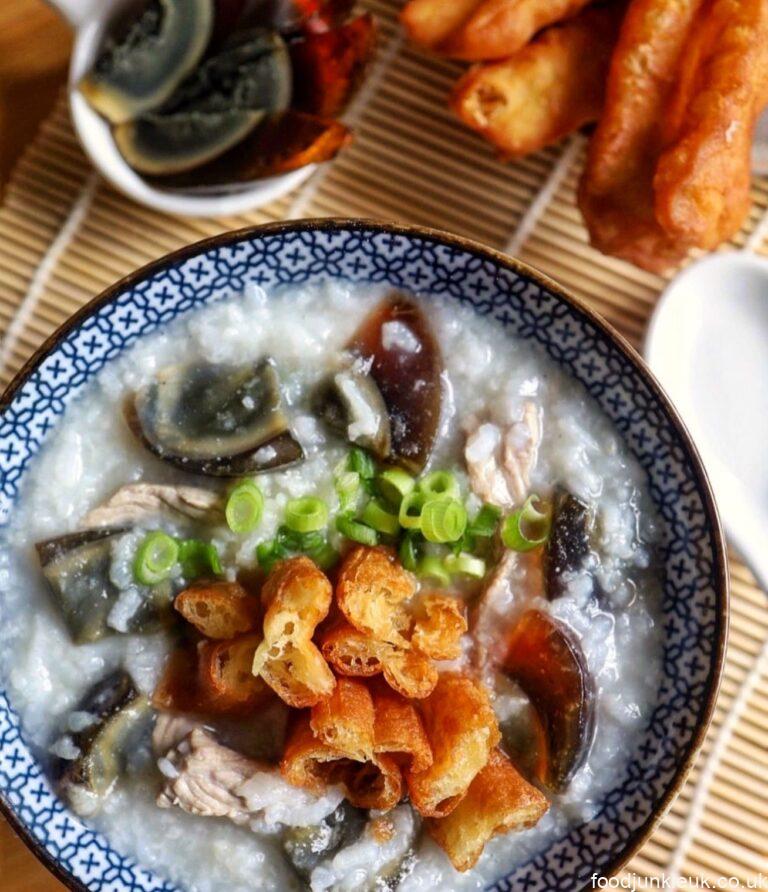
Thousand-Year Egg and Pork Congee
- Serves:
- 2-3
- Prep Time:
- 10 Minutes
- Cooking Time:
- 60-70 Minutes
Ingredients
Instructions
- 1Rinse the rice and drain it.
- 2Bring the water or chicken stock to the boil, add the rice and simmer on a low heat for about an hour, stirring now and then so it doesn’t stick, until the rice breaks down.
- 3Peel the thousand-year eggs and cut them into small pieces.
- 4Add the pork strips and the eggs and cook for 5-10 minutes, until the pork is cooked through.
- 5Season with salt and white pepper.
- 6Top with chopped spring onions and serve with youtiao.
Use about 1:12 rice to water for a thicker congee, or 1:13 for a thinner one. Chicken stock instead of water gives it extra flavour.
More recipes
See all